
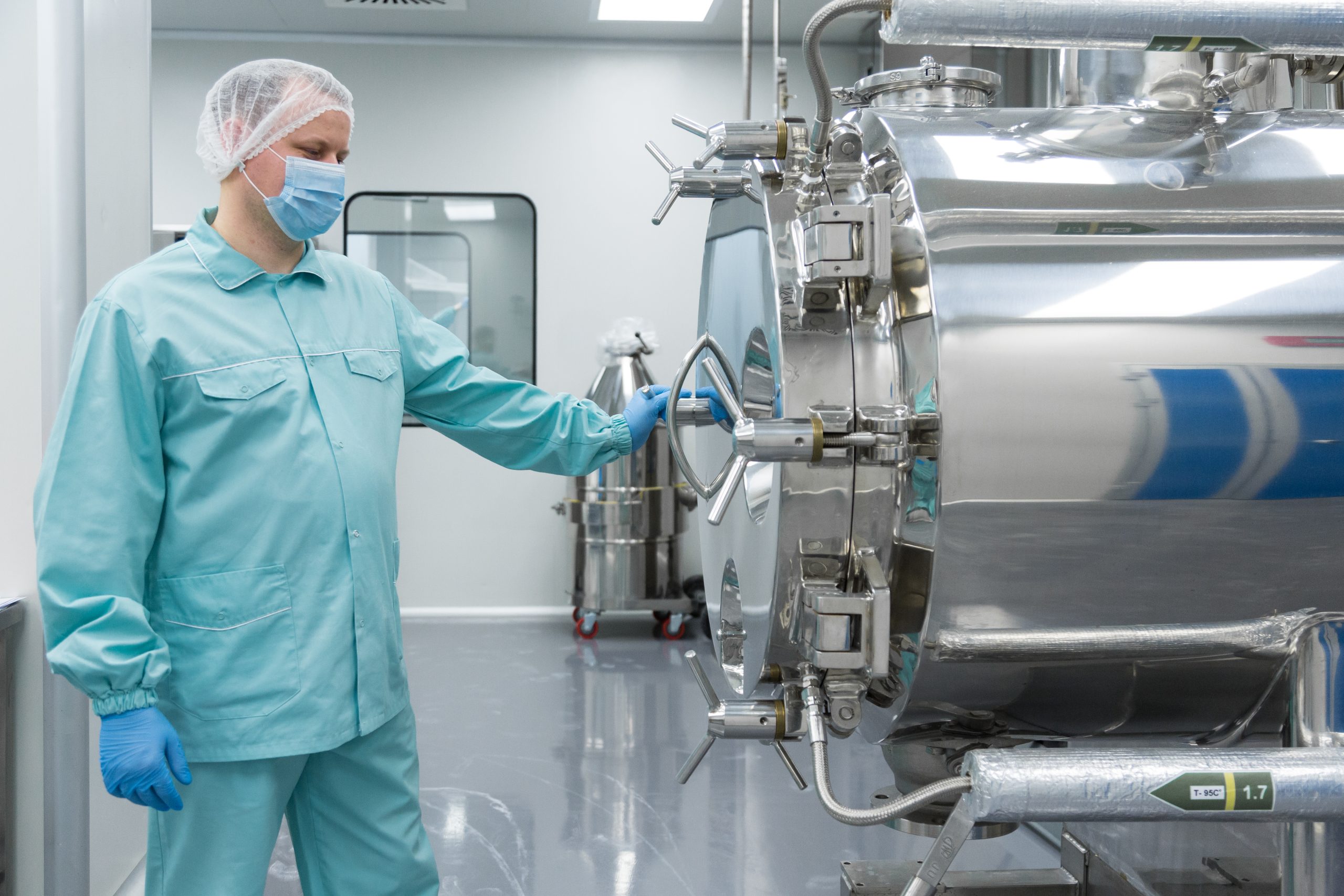
The regulatory landscape for pharmaceutical and sterile manufacturing continues to evolve, and implementation of the revised EU GMP Annex 1 has elevated expectations around contamination control—particularly regarding chemical residues and microbial carryover following disinfection.
For decades, 70% Isopropyl Alcohol (IPA) has been considered the gold standard for final wipe-downs. Its rapid evaporation and familiar use make it convenient, but Annex 1 is forcing manufacturers to confront a critical reality: a visually stained surface is a source of nonviable particulates and elevates the risk of microbial contamination.
1. The Solvency Misconception: Water Is Often Superior to Alcohol
The primary objective of post-disinfection cleaning is not disinfection itself—it is the removal of residual disinfectants and sporicides, including quaternary ammonium compounds, peracetic acid blends, and oxidizing agents that can remain on surfaces long after application.
The IPA Limitation
Many of these active chemistries are hydrophilic. They dissolve readily in water but only partially in alcohol. When wiped with 70% IPA, residues are often spread rather than removed, resulting in the familiar alcohol haze, streaking, or film formation that Annex 1 inspectors increasingly scrutinize.
The Water Advantage
Ultra-pure water (Purified Water or WFI) is fundamentally more effective at solubilizing and lifting water-based disinfectant residues. The historical challenge has been drying time—but that limitation is now being addressed through material science rather than chemistry.
2. Residue Removal Must Also Address Microbial Contaminants
Annex 1 emphasizes contamination control across the full cleaning lifecycle, not just the kill step. If microorganisms are killed but not physically removed, they can remain as endotoxin sources, biofilm precursors, or recontamination vectors.
Independent laboratory testing demonstrates that MiraWIPE® microfiber wipers presaturated with 100% ultra-pure water provide effective physical removal of common pharmaceutical indicator organisms:
-
E. coli (ATCC 8739): ~2.9 log₁₀ reduction (~99.9% removal)
-
Staphylococcus aureus (ATCC 6538): up to ~3.0 log₁₀ reduction (~99.9% removal)
-
Pseudomonas aeruginosa (ATCC 9027): ~2.8 log₁₀ reduction (~99.8% removal)
These results confirm that mechanical removal using water-based microfiber wiping is highly effective, supporting Annex 1’s focus on removal, not just microbial inactivation
3. Environmental and Operator Safety Risks of Alcohol-Heavy Cleaning
Heavy reliance on IPA for large surface areas—walls, floors, isolators, and equipment exteriors—creates compounding operational risks:
-
VOC emissions: Excessive IPA use can push facilities toward environmental permit limits.
-
Flammability hazards: Alcohol vapor accumulation increases fire risk and operator exposure.
-
Residue persistence: IPA can leave behind redistributed disinfectant films rather than removing them.
Annex 1 encourages risk-based reduction of unnecessary hazards, making overuse of alcohol increasingly difficult to justify.
The Annex 1-Aligned Solution: Water-First, Data-Driven Wiping
To meet Annex 1 expectations for demonstrably clean surfaces, many facilities are now introducing a dedicated residue-removal step following disinfection.
The historical concern—slow drying and water spotting—has been resolved through advanced microfiber engineering.
Introducing the Next Generation of Residue and Bioburden Removal
MiraWIPE® microfiber cleanroom wipers are engineered to enable water-based cleaning without sacrificing drying performance:
-
Efficient residue removal: When wetted with ultra-pure water, the woven microfiber structure provides high surface contact and mechanical lift to fully remove disinfectant and sporicide residues.
-
Proven microbial removal: Independent testing confirms ≥99.8–99.9% physical removal of common pharmaceutical microorganisms via wiping alone.
-
Near wiper-dry finish: High absorbency and low release leave surfaces visibly dry, minimizing water spots and downtime.
-
Low lint, low extractables: Suitable for Grade A/B environments when used in validated cleaning protocols.

MiraSAT® EHS: Ready-to-Use Compliance Without the Handling Risk
For facilities seeking operator safety and process consistency, MiraSAT® EHS extends these benefits in a pre-saturated, environmentally conscious format:
-
Presaturated with 100% ultra-pure water
-
Eliminates manual mixing and dilution errors
-
Reduces alcohol exposure and VOC burden
-
Provides consistent, validated residue and microbial removal performance
MiraSAT EHS is particularly well suited for routine Annex 1 residue-removal steps, isolator cleaning, and high-frequency wipe applications where safety, repeatability, and compliance are critical.

A Smarter, Safer Path Forward Under Annex 1
By strategically replacing alcohol-only wipe-downs with water-based microfiber removal, followed by IPA only where sterility or rapid evaporation is required, pharmaceutical manufacturers can:
-
Achieve superior disinfectant residue removal
-
Physically remove microbial contaminants
-
Reduce VOC emissions and flammability risk
-
Align cleaning practices with Annex 1’s risk-based expectations
Annex 1 is not asking facilities to clean faster—it is asking them to clean smarter.
How is your facility adapting residue and bioburden removal protocols to meet the heightened expectations of EU GMP Annex 1?
Contact Us Today!